Hurghada Fishes: The Complete Guide to Red Sea Marine Life (2026)
🐠 25 Fish Species
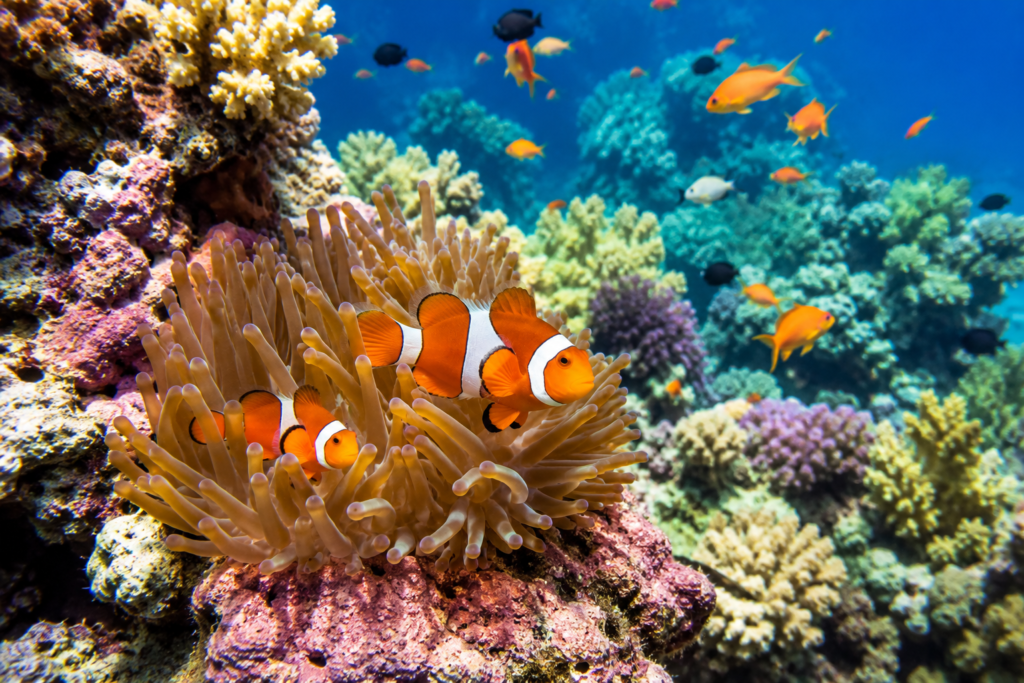
The fishes of Hurghada are among the most extraordinary and diverse on the planet. Just beneath the surface of the Red Sea — moments from your hotel beach, minutes by boat from Hurghada’s marina — lies an underwater world of staggering colour, variety, and life that has made this stretch of Egyptian coastline one of the top five snorkelling and diving destinations on Earth.
The Red Sea near Hurghada is home to over 1,200 species of fish, with approximately 10% found nowhere else on the planet. From the tiny, vivid clownfish nestled in sea anemones to the enormous Napoleon wrasse patrolling the outer reef; from schools of shimmering barracuda to the alien stillness of a perfectly camouflaged scorpionfish — every dive or snorkel in Hurghada’s waters is a journey into a living, breathing ecosystem of breathtaking complexity.
Whether you are a first-time snorkeller floating above Abu Ramada Reef, a certified diver exploring the walls of Giftun Island National Park, or simply curious about what swims beneath the Red Sea’s surface — this guide is your complete reference to the fish of Hurghada.
In this guide, you will discover:
- The 20 most iconic Hurghada fish species — with full identification guides
- The best dive and snorkel sites to see specific fish around Hurghada
- Seasonal fish guides — what to see and when
- Safety information on dangerous species (lionfish, scorpionfish, moray eels)
- Conservation tips for responsible reef interaction
- How to book snorkelling and diving trips to see Hurghada’s fish up close
Let’s dive in.
⚡ TL;DR — Hurghada Fishes at a Glance
- 🐠 Total Red Sea fish species: 1,200+ (10% endemic — found nowhere else on Earth)
- 🌊 Water visibility: 20–30 metres year-round — exceptional clarity
- 🌡️ Water temperature: 22–28°C — no wetsuit needed most months
- 🏆 Best snorkel site for fish: Abu Ramada Reef (“The Aquarium”) and Giftun Island
- 🐬 Dolphins: Spinner and bottlenose at Dolphin House (Sha’ab Samadai)
- 🦈 Sharks: Whitetip/blacktip reef sharks (harmless), whale sharks (seasonal, June–Aug)
- ⚠️ Handle with care: Lionfish, scorpionfish, stonefish, triggerfish (nesting season)
- 📅 Best time for fish: Year-round — October–May ideal for comfort
Bottom Line: Hurghada’s Red Sea fish are world-class in variety, colour, and accessibility — whether you snorkel in 2 metres of water or dive to 30 metres, you will encounter marine life that exists nowhere else on Earth.
- Why Are Hurghada’s Fishes So Special?
- The 20 Most Iconic Hurghada Fish Species
- Endemic Red Sea Fish: Found Nowhere Else on Earth
- Dangerous Fish of Hurghada — What to Watch For
- Best Dive & Snorkel Sites for Seeing Hurghada Fishes
- Seasonal Guide: What Fish to See and When
- Hurghada Fishes for Beginners: Snorkelling vs Diving
- How to Interact Responsibly with Red Sea Fish
- Quick Reference: Hurghada Fish Identification Table
- Frequently Asked Questions
- Conclusion & Book Your Snorkel or Dive Trip
1. Why Are Hurghada’s Fishes So Special?
The Red Sea near Hurghada is one of the most biologically extraordinary bodies of water on Earth — and the fish it supports are the primary reason. The explanation for this marine richness lies in the Red Sea’s unique geography and geology.
The Red Sea is nearly landlocked — connected to the Indian Ocean only through the narrow Strait of Bab-el-Mandeb at its southern end. This relative isolation, combined with high salinity (about 40‰, compared to ocean average of 35‰), exceptionally warm and stable temperatures, and high levels of UV light penetrating the clear water, has created an evolutionary pressure cooker over millions of years. The result: fish species that have evolved in uniquely extreme conditions, developing colours, behaviours, and physiologies found nowhere else on the planet.
The shallow reefs around Hurghada — particularly Giftun Island National Park, Abu Ramada, Sha’ab Abu Nuhas, and Fanadir — are carpeted with over 200 species of hard and soft coral, which provide shelter, breeding grounds, and food sources for the fish populations. This coral architecture, combined with the Red Sea’s extraordinary water clarity (visibility commonly exceeding 25 metres), makes fish-watching in Hurghada a genuinely unmatched experience.
The Red Sea near Hurghada, Egypt, is home to over 1,200 species of fish — approximately 10% of which are endemic, meaning they exist nowhere else in the world. The sea’s near-landlocked geography, high salinity (approximately 40‰), stable warm temperatures (22–28°C year-round), and exceptional water clarity (visibility up to 30 metres) have created one of Earth’s most biodiverse shallow marine ecosystems. Hurghada is consistently ranked among the top five snorkelling and diving destinations globally by marine biologists and travel organisations.
2. The 20 Most Iconic Hurghada Fish Species
Here are the fish you are most likely — and most eager — to encounter in Hurghada’s Red Sea waters:
Most Beloved
The Red Sea Clownfish — the real-life Nemo — is the most sought-after fish for first-time snorkellers and divers. The Red Sea’s own species (Amphiprion bicinctus) has a vivid orange body with two bold white bars, living exclusively in the stinging tentacles of its host sea anemone in a perfectly evolved symbiotic relationship. The clownfish is immune to the anemone’s sting and in return protects it from predators. You will find them on almost every Hurghada reef, particularly at Abu Ramada and Giftun Island, making a guaranteed “Finding Nemo” moment for every snorkeller.
Icon Species
The Napoleon Wrasse is the undisputed king of the Red Sea reef — the largest coral reef fish in the world. Males develop a distinctive hump on their forehead (the “Napoleon” profile), which grows more pronounced with age. Their colouring shifts from blue-green to electric turquoise, and their thick lips and intelligent eyes give them an almost human expressiveness. Encounters at Giftun Island’s outer walls and Sha’ab Abu Nuhas are among the most memorable dives in Hurghada. This species is listed as Endangered on the IUCN Red List — never approach or chase them.
⚠️ Venomous
The Lionfish is one of the most photogenic — and most venomous — fish on Hurghada’s reefs. Its ornate, fan-like pectoral fins and vivid red-and-white striped body make it unmistakable, but its 18 venomous spines are no ornament. Lionfish are slow-moving ambush predators, typically found lurking under ledges and in crevices at sites like Gota Abu Ramada and Fanadir Reef. They are a natural and essential part of the Red Sea ecosystem. Admire from a respectful distance of at least 50 cm — never touch. A sting causes intense, burning pain and requires immediate medical attention.
Reef Builder
The Parrotfish is one of the reef’s most important residents — and you will hear them before you see them. Their beak-like fused teeth (the “parrot” beak) crunch through coral polyps and rock, extracting algae and excrete the resulting material as white sand — literally creating the beautiful white sand beaches of the Red Sea. Several colourful species inhabit Hurghada’s reefs, and their colours change dramatically between juvenile and adult phases. A large group of parrotfish feeding creates an extraordinary sound that fills the water — one of the most distinctive sensations of snorkelling in Hurghada.
Most Stunning
The Emperor Angelfish is widely considered the most visually spectacular fish in the Red Sea. Adults display an extraordinary pattern of horizontal electric blue and yellow stripes on a dark body, with a black eye mask bordered in blue and a vivid yellow tail. Juveniles are entirely different — dark blue with concentric white circles — and were once thought to be a separate species entirely. They are typically found in pairs near rich coral formations. A sighting of an adult Emperor Angelfish is a moment that stays with every snorkeller and diver for life.
Reef Predator
The Giant Moray Eel is the largest moray species in the Red Sea — growing up to 3 metres and weighing up to 30 kg. Its constantly open mouth (which appears threatening) is simply how it breathes water through its gills. Morays are shy, nocturnal predators that rest in reef crevices during daylight hours, usually visible from the neck up as they peer out at passing divers. They are fundamentally harmless unless provoked or hand-fed — feeding morays by hand has resulted in serious bites and is strongly discouraged by conservation guidelines. Sites like Sha’ab Abu Nuhas are excellent for moray encounters.
Faithful Partners
The Butterflyfish family is one of the most diverse and visually beautiful groups on Hurghada’s reefs, with over 12 species recorded in the Red Sea. They are almost always seen in mated pairs that remain together for life — one of the most touching examples of loyalty in the animal kingdom. The Masked Butterflyfish (Chaetodon semilarvatus) — golden-yellow with a blue-black eye mask — is a Red Sea endemic, one of the most photographed fish in Hurghada’s waters. Butterflyfish feed on coral polyps and are one of the best indicators of reef health: a thriving butterflyfish population means a healthy reef ecosystem.
⚠️ Master of Disguise
The Scorpionfish is one of the most dangerous fish on Hurghada’s reefs — not because it attacks, but because it is nearly impossible to see. Its mottled, textured skin matches reef rock and coral so perfectly that divers regularly float within centimetres without noticing. They are ambush predators with venomous dorsal spines — stepping on or touching one causes excruciating pain requiring immediate medical treatment. Spotting a scorpionfish is considered a badge of honour among experienced divers at sites like Fanadir and the El Mina wreck. Shuffle your feet when wading in shallow reef areas to avoid accidental contact.
Red Sea Endemic
The Sohal Surgeonfish is one of the most elegant and territorial fish in Hurghada’s shallow reef waters — and a Red Sea endemic, found nowhere else. Its striking electric-blue body is lined with fine white horizontal stripes and tipped with vivid orange at the pectoral fins. The “surgeon” in the name refers to the razor-sharp spines at the base of the tail — a defence mechanism capable of inflicting a serious wound. Sohal surgeonfish are highly territorial and will aggressively defend their patch of reef against fish several times their size. They are commonly seen on reef crests at 1–5 metres depth.
Most Distinctive
The Picasso Triggerfish (also called the Arabian Picassofish) is one of the most visually striking fish in the Red Sea — its extraordinary abstract colour pattern of black, white, yellow, blue, and orange looks like a brushstroke painting. They are found throughout Hurghada’s shallow reefs and are generally non-threatening except during nesting season (summer months) when they aggressively defend cone-shaped nests dug in sandy areas of the reef. A nesting triggerfish will charge divers and snorkellers — swim horizontally away, not upward, as they defend a cone-shaped territory extending toward the surface.
3. Endemic Red Sea Fish: Found Nowhere Else on Earth
Approximately 10% of the Red Sea’s fish species are endemic — they evolved here and exist nowhere else on the planet. For divers and snorkellers, encountering an endemic species is the equivalent of seeing a living rarity — something that simply cannot be experienced anywhere else in the world.
| Endemic Species | Scientific Name | Key Feature | Where to See in Hurghada |
|---|---|---|---|
| Red Sea Clownfish | Amphiprion bicinctus | Two white bars (vs one in Indo-Pacific species) | All reef sites — very common |
| Sohal Surgeonfish | Acanthurus sohal | Blue stripes, orange accent, razor tail | Reef crests, shallow sites |
| Masked Butterflyfish | Chaetodon semilarvatus | Golden yellow, blue-black eye mask | Abu Ramada, Giftun Island |
| Red Sea Bannerfish | Heniochus intermedius | Black and white stripes, elongated dorsal fin | All reefs, often in pairs |
| Blue-cheeked Butterflyfish | Chaetodon semilarvatus | Distinctive blue face markings | Coral-rich reef sections |
| Arabian Picassofish | Rhinecanthus assasi | Abstract multicolour patterning | Sandy reef areas, 1–30 m |
| Orangeface Butterflyfish | Chaetodon larvatus | White body, chevron back, orange face | Coral gardens, Abu Ramada |
Approximately 10% of the Red Sea’s 1,200+ fish species are endemic — evolving in isolation due to the sea’s near-landlocked geography and unique environmental conditions including high salinity, stable water temperatures, and intense UV exposure. Notable endemics found in Hurghada include the Red Sea Clownfish (Amphiprion bicinctus), the Sohal Surgeonfish (Acanthurus sohal), and the Masked Butterflyfish (Chaetodon semilarvatus). These species represent an irreplaceable component of global marine biodiversity.
4. Dangerous Fish of Hurghada — What to Watch For
The overwhelming majority of Hurghada’s fish are harmless and completely indifferent to divers and snorkellers. However, several species carry venomous spines or exhibit territorial behaviour that requires awareness. None are aggressive — all encounters can be made safe with basic knowledge and respectful behaviour.
The golden rule of Red Sea diving and snorkelling: look, never touch. No marine creature in Hurghada’s waters will attack a diver or snorkeller unprovoked. Every dangerous encounter reported in the Red Sea has involved touching, feeding, cornering, or accidentally stepping on marine animals. Maintain a respectful distance of at least 50 cm from all reef fish and creatures.
| Species | Danger Type | Risk Level | What To Do If Encountered |
|---|---|---|---|
| Lionfish | Venomous dorsal spines | ⚠️ Medium — if touched | Admire from 50+ cm. Never touch. If stung: hot water immersion, see doctor. |
| Scorpionfish | Venomous dorsal spines | ⚠️ Medium — nearly invisible | Never touch the reef. Shuffle feet in shallows. If stung: hot water, see doctor urgently. |
| Stonefish | Most venomous fish on Earth | 🔴 High — if stepped on | Never walk barefoot on reef. Wear reef shoes. Stung: hot water immersion, hospital immediately. |
| Triggerfish (nesting) | Bite — territorial | ⚠️ Low–Medium (summer) | Swim horizontally away, not upward. Give nesting fish wide berth. |
| Moray Eel | Bite — if provoked | ⚠️ Low (if not fed/provoked) | Never feed. Never put hands in reef holes. Observe from distance. |
| Whitetip Reef Shark | Very rare — bite if spearfishing | 🟢 Very low | Stay calm. Slow movements. No spearfishing. No blood in water. |
5. Best Dive & Snorkel Sites for Seeing Hurghada Fishes
Different sites around Hurghada are famous for specific fish encounters. Here is your guide to the best spots:
🏝️ Giftun Island National Park
The most biodiverse site near Hurghada. Both islands (Small and Big Giftun) are ringed by spectacular reefs with the highest fish density in the area. Expect Napoleon wrasse, eagle rays, reef sharks, turtles, and extraordinary coral gardens. A protected national park — anchor damage is illegal.
🐠 Abu Ramada Reef (“The Aquarium”)
Named for its extraordinary fish density in very shallow water. Ideal for first-time snorkellers. Clownfish, parrotfish, butterflyfish, angelfish, and moray eels are virtually guaranteed in just 3–8 metres of crystal-clear water. This is the most popular family snorkel site near Hurghada.
🐬 Dolphin House (Sha’ab Samadai)
A protected horseshoe reef 45 minutes from Hurghada, home to a resident pod of 60–100 spinner dolphins. Morning visits offer the best dolphin encounters while they rest. The reef itself is excellent for parrotfish, surgeonfish, and large grouper populations.
🪸 Fanadir Reef
Renowned for its exceptional variety of smaller reef fish and macro life. Scorpionfish, lionfish, and crocodilefish are regularly spotted here. The reef walls are draped in soft coral and home to resident moray eels and cleaning stations where fish queue to have parasites removed.
⚓ Sha’ab Abu Nuhas (Wreck Site)
Home to four famous wrecks, all colonised by extraordinary marine life. Giant moray eels up to 2.5 metres, large Napoleon wrasse, barracuda schools, and lionfish hunting in the wreck’s sheltered holds. The wrecks have become artificial reefs of astonishing biological richness.
🌊 Magawish Island
A calm, family-friendly reef close to Hurghada. Protected from currents, with shallow coral gardens perfect for children and nervous snorkellers. Clownfish, damselfish, wrasses, and butterflyfish in abundance. Combines well with a beach day at the island’s sand beach.
Giftun Island National Park, located approximately 8 kilometres south of Hurghada marina, is Egypt’s most visited marine protected area and one of the Red Sea’s richest reef ecosystems. The park encompasses two islands and their surrounding coral reef systems, home to over 400 species of fish and 150 species of coral. The site is protected under Egyptian law, prohibiting anchor damage, fish feeding, and coral collection. Access is via licensed tour operators from Hurghada, typically by boat in 20–30 minutes.
6. Seasonal Guide: What Hurghada Fish to See and When
| Month | Water Temp | Visibility | Best Fish Encounters | Special Highlights |
|---|---|---|---|---|
| Jan–Feb | 22–23°C | 25–30 m | Excellent | Manta rays, whale sharks (rare), calm clear reefs |
| Mar–Apr | 23–25°C | 25–30 m | ⭐ Peak season | Dolphins, turtles, eagle rays, full reef activity |
| May–Jun | 26–28°C | 20–28 m | Very good | Whale sharks start appearing on outer reefs |
| Jul–Aug | 28–30°C | 18–25 m | Good | 🐋 Whale sharks peak season · ⚠️ Triggerfish nesting |
| Sep–Oct | 27–29°C | 22–28 m | Very good | Large pelagic fish on outer reefs, barracuda schools |
| Nov–Dec | 24–26°C | 25–30 m | ⭐ Excellent | Dolphins active, turtles, full reef biodiversity |
7. Hurghada Fishes for Beginners: Snorkelling vs Diving
One of the great joys of Hurghada’s underwater world is its accessibility. You do not need to be a scuba diver to encounter spectacular fish. Here is how the two experiences compare for fish-watching:
| Factor | 🤿 Snorkelling | 🧊 Scuba Diving |
|---|---|---|
| Certification needed | None | Yes (or Discover Scuba) |
| Depth accessed | Surface to ~5 m | Surface to 40 m (recreational) |
| Fish species accessible | ~60–70% of reef species | 100% including deep-water species |
| Clownfish, butterflyfish, parrotfish | ✅ Easily | ✅ Easily |
| Napoleon wrasse, reef sharks | ⚠️ Occasional, outer reefs | ✅ Regularly on most dives |
| Lionfish, scorpionfish, moray | ⚠️ Shallow specimens only | ✅ Reliably |
| Cost per trip | Lower | Higher (but worth it) |
| Best sites | Abu Ramada, Magawish, Giftun Lagoon | Sha’ab Abu Nuhas, Fanadir, Giftun walls |
| Best for | Families, beginners, non-swimmers | Serious fish enthusiasts |
🏅 Top 5 Fish Guaranteed Even for First-Time Snorkellers
- 🟠 Red Sea Clownfish — in anemones on almost every reef
- 🎨 Picasso Triggerfish — distinctive pattern, shallow sandy areas
- 🦜 Parrotfish — large, colourful, heard as well as seen
- 🦋 Butterflyfish (multiple species) — in pairs on every reef
- 🐡 Pufferfish — round, curious, and comically approachable
8. How to Interact Responsibly with Red Sea Fish
Hurghada’s reefs are extraordinary — but they are also fragile. Coral reef ecosystems that took thousands of years to build can be damaged in seconds by careless divers and snorkellers. Here is how to be a responsible visitor to Hurghada’s underwater world:
| ✅ DO | ❌ DO NOT |
|---|---|
| Observe fish from a respectful distance (50+ cm) | Touch, chase, or corner any marine life |
| Use reef-safe sunscreen (mineral-based) | Apply chemical sunscreen before entering the water |
| Stay horizontal while snorkelling to avoid kicking coral | Stand on, kick, or break coral |
| Use proper buoyancy control when diving | Feed fish — disrupts natural feeding behaviour |
| Book licensed, eco-conscious tour operators | Buy coral, shell, or marine life products as souvenirs |
| Report reef damage to guides immediately | Remove any marine organism from its habitat |
| Wear fins to avoid accidental reef contact | Wear flippers if you cannot control their kick |
Hurghada’s reefs are protected under Egyptian environmental law. Giftun Island National Park is a designated protected area — damaging coral or disturbing marine life within its boundaries carries significant fines. Choose operators who follow the HEPCA (Hurghada Environmental Protection and Conservation Association) guidelines for responsible Red Sea tourism.
9. Quick Reference: Hurghada Fish Identification Table
| Fish | Size | Colour / ID Feature | Depth | Snorkel Visible? | Site |
|---|---|---|---|---|---|
| Red Sea Clownfish | 10–14 cm | Orange, 2 white bars | 1–30 m | ✅ Yes | All reefs |
| Napoleon Wrasse | Up to 2.3 m | Blue-green, forehead hump | 10–100 m | ⚠️ Rare | Giftun outer |
| Lionfish | 25–35 cm | Red/white stripes, fan fins | 2–50 m | ✅ Shallow | Gota Abu Ramada |
| Emperor Angelfish | 30–40 cm | Blue/yellow horizontal stripes | 3–70 m | ✅ Yes | All healthy reefs |
| Parrotfish | 20–75 cm | Multicolour, beak teeth | 1–25 m | ✅ Yes | All reefs |
| Moray Eel (Giant) | Up to 3 m | Brown/green mottled, thick body | 5–50 m | ⚠️ Crevices | Sha’ab Abu Nuhas |
| Masked Butterflyfish | 18–22 cm | Golden yellow, blue-black mask | 3–20 m | ✅ Yes | Abu Ramada |
| Sohal Surgeonfish | 30–40 cm | Blue stripes, orange pectoral | 0–20 m | ✅ Yes | Reef crests |
| Picasso Triggerfish | 20–30 cm | Abstract multicolour | 1–30 m | ✅ Yes | Sandy reef areas |
| Scorpionfish | 15–35 cm | Mottled brown — matches rock | 1–200 m | ⚠️ Hard to see | Fanadir |
| Barracuda | Up to 1.8 m | Silver, torpedo-shaped, schooling | 3–30 m | ⚠️ Open water | Giftun, outer reefs |
| Whitetip Reef Shark | 1.5–2.1 m | Grey, white fin tips | 8–40 m | ❌ Dive only | Outer Giftun walls |
| Blue-spotted Stingray | 50–90 cm span | Brown with electric blue spots | 1–20 m | ✅ Sandy bottoms | Abu Ramada lagoon |
| Whale Shark | 6–12 m | Grey, white spots — unmistakable | Surface–30 m | ✅ Seasonal | Outer reefs (Jun–Aug) |
| Pufferfish (Masked) | 30–50 cm | Brown/yellow, round, comical | 1–25 m | ✅ Yes | All reefs |
| Grouper (Arabian) | 30–100 cm | Brown/orange speckled, large | 5–50 m | ✅ On reefs | All dive sites |
10. Frequently Asked Questions About Hurghada Fishes
In Hurghada you can see over 1,200 species of Red Sea fish, including the Red Sea Clownfish (anemonefish), Napoleon wrasse, parrotfish, emperor angelfish, various butterflyfish, moray eels, lionfish, scorpionfish, barracuda, grouper, surgeonfish, triggerfish, blue-spotted stingrays, and eagle rays. Seasonal visitors include whale sharks (June–August) and occasional hammerhead sharks on outer reefs. Even a basic snorkel trip from the beach will typically reveal 20–30 different species.
Yes — several shark species inhabit the Red Sea near Hurghada, most commonly whitetip reef sharks and blacktip reef sharks on the outer reefs. Whale sharks — the largest fish in the ocean — visit seasonally from June to August. However, sharks in Hurghada pose minimal risk to divers and snorkellers. No fatal shark attack on a scuba diver has ever been recorded in the Egyptian Red Sea. Reef sharks are shy and will typically retreat when approached by divers. Never feed fish or enter the water with open wounds.
Yes — snorkelling in Hurghada is extremely safe when conducted with a licensed operator and following basic safety guidelines. The Red Sea near Hurghada has gentle currents on most reef sites, clear water, and no dangerous large predators in shallow snorkel zones. Children from age 6 upward can safely snorkel with proper supervision. The primary risks are sunburn, dehydration, and accidental contact with venomous reef creatures (avoided by not touching anything).
Abu Ramada Reef (nicknamed “The Aquarium”) is the top site for beginner snorkellers — shallow water (3–8 metres), calm conditions, and extraordinarily dense fish populations including clownfish, parrotfish, angelfish, and moray eels. Magawish Island is excellent for families with young children due to its protected, calm lagoon setting. Both are accessible on standard half-day snorkel boat tours from Hurghada marina.
Yes — seeing the Red Sea Clownfish is virtually guaranteed on any Hurghada snorkel trip. The Red Sea Clownfish (Amphiprion bicinctus), with its vivid orange colouring and two white bars, is abundant throughout Hurghada’s shallow reefs. They live in sea anemones and are found at water depths as shallow as 1–2 metres, making them easily visible to snorkellers. Abu Ramada Reef has particularly high clownfish populations.
Yes — spinner dolphins and bottlenose dolphins are resident in Hurghada’s waters year-round. The most reliable spot for dolphin encounters is Dolphin House (Sha’ab Samadai), where a pod of 60–100 spinner dolphins lives permanently. Morning boat trips (departing before 8 AM) offer the best encounters. Dolphin House is a protected area — swimming with dolphins is permitted in designated zones only, and operators must follow strict interaction guidelines.
Snorkelling in Hurghada is rewarding year-round thanks to the Red Sea’s stable warm temperatures (22–28°C) and exceptional visibility. The optimal months for combining comfort, diversity, and specific species are March–May and October–November. For whale sharks specifically, June–August is the peak season. The best time of day is always 7:00–10:00 AM — clearest light, calmest water, most active fish feeding.
The key species to be aware of are: Lionfish (venomous spines — admire from distance), Scorpionfish (extremely well-camouflaged, venomous — never touch the reef), Stonefish (most venomous fish on Earth — wear reef shoes), and Triggerfish during nesting season (summer months — swim horizontally away if charged). None of these fish are aggressive — all dangerous encounters result from accidental contact or deliberate provocation. The rule: never touch anything underwater.
The Red Sea near Hurghada is home to approximately 1,200 documented fish species, of which roughly 10% are endemic — meaning they evolved here and exist nowhere else in the world. This extraordinary biodiversity results from the Red Sea’s unique geography (near-landlocked), high salinity, stable water temperatures, and the extensive coral reef systems that provide habitat for the fish populations. The Giftun Island National Park alone has recorded over 400 fish species.
Whale shark sightings in Hurghada are possible but not guaranteed. Whale sharks — the world’s largest fish at up to 12 metres, entirely harmless filter-feeders — visit the outer reefs of the Red Sea near Hurghada primarily from June through August, attracted by seasonal plankton blooms. When sightings occur, responsible operators allow snorkellers (not scuba divers, to avoid bubble disturbance) to swim alongside at a respectful 3-metre distance. Ask your operator about current whale shark reports before booking.
11. Final Thoughts: Hurghada’s Fishes Are a World Treasure
The fish of Hurghada’s Red Sea are not merely a holiday attraction — they are a genuinely irreplaceable component of global marine biodiversity. With over 1,200 species, 10% endemic to this sea alone, living among coral reef systems that took thousands of years to develop, what lies beneath Hurghada’s surface is as extraordinary as anything the ancient world above the surface has to offer.
Every snorkel trip to Abu Ramada or Giftun Island, every dive at Fanadir or Sha’ab Abu Nuhas, every early morning encounter with spinner dolphins at Dolphin House — these are experiences that change how you see the natural world. They are available to virtually every visitor to Hurghada, from the youngest child floating above a shallow reef to the experienced technical diver descending to the outer walls.
Hurghada’s fishes have been here for millions of years. They will continue to thrive if we visit them with the respect, patience, and care they deserve. The most important thing you can do as a visitor is leave nothing behind — no footprint on the coral, no disruption to the ecosystem — and take nothing with you except memories and photographs.
🐠 Ready to Swim with Hurghada’s Fishes?
Book your snorkelling or diving trip with Hurghada Excursion — licensed Red Sea specialists offering guided reef trips to Giftun Island, Dolphin House, Abu Ramada, and beyond. All equipment provided.
✅ Giftun Island National Park ✅ Dolphin House ✅ Abu Ramada “The Aquarium” ✅ Snorkelling & Diving
👉 Book Your Red Sea Fish Trip Now
🌐 hurghada-excursion.com | 📧 [email protected] | Instant booking · Best price guaranteed
